> #agents

13 posts

Ephemeral Agents

Occasionally I want Claude Code to do something that doesn’t require access to any of my files or a persistent output. Think something like “open this website and summarize it for me” or “here is a link to a zip, what’s in it”. My goto solution was having a folder ~/empty and starting claude in there with the built-in bubblewrap sandbox. Two issues: First, that folder is no longer empty and just fills with all the garbage I temporarily dumped there. Second, the Claude Code sandbox is not very great, both from a usability and security standpoint 1. And I don’t want Claude to even have read access to any part of my filesystem, which is enabled by default in the sandbox.

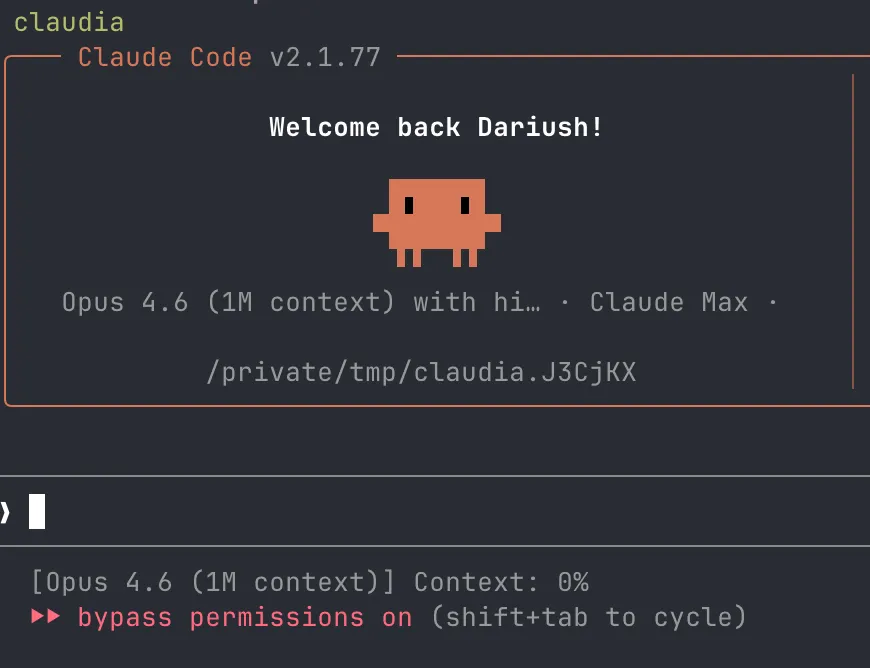
Now I have a new command for that, instead of claude I just call `claudia` (inspired by the gitworktree folder names).

claudia () {
        local dir=$(mktemp -d /tmp/claudia.XXXXXX)
        pushd "$dir" > /dev/null && safehouse --append-profile="$HOME/.config/safehouse/profiles/nix.sb" -- claude --dangerously-skip-permissions
        popd > /dev/null
        rm -rf "$dir"
}

It uses the safehouse sandbox-wrapper to run claude through sandbox-exec (mac exclusive) in a fresh temporary folder that it cleans up afterwards. In contrast to the default sandbox this also works with uv and nix-shell, using this profile. It also gives write-access to the nix-cache so the agent can run nix-shell and get new dependencies. This is somewhat of a security risk, but very convenient :)

Sandbox Profile
cat $HOME/.config/safehouse/profiles/nix.sb
;; Toolchain: Nix
;; Nix store, nix-darwin system profile, home-manager, and user profile paths.

;; Read-only access to the Nix store and daemon infrastructure.
(allow file-read*
    (subpath "/nix")
)

;; nix-darwin system profile.
(allow file-read*
    (literal "/run")
    (literal "/run/current-system")
    (subpath "/run/current-system/sw")
)

;; Per-user Nix profiles managed by nix-darwin and home-manager.
(allow file-read*
    (literal "/etc/profiles")
    (literal "/private/etc/profiles")
    (subpath "/private/etc/profiles/per-user")
    (subpath "/etc/profiles/per-user")
)

;; User-level Nix profile and caches.
(allow file-read*
    (home-literal "/.nix-profile")
    (home-subpath "/.nix-profile")
    (home-subpath "/.config/nix")
    (home-subpath "/.nix-defexpr")
    (home-literal "/.nix-channels")
)

(allow file-read* file-write*
    (home-subpath "/.cache/nix")
    (home-subpath "/.local/state/nix")
)

;; nix-darwin manages /etc/zshenv and other shell startup files.
(allow file-read*
    (literal "/private/etc/zshenv")
    (literal "/private/etc/zshrc")
    (literal "/private/etc/zprofile")
    (literal "/private/etc/profile")
    (subpath "/private/etc/paths.d")
    (literal "/private/etc/paths")
)
Footnotes

  1. I will link here why once responsible disclosure allows.

Can Agents Utilize Humans to Beat Other Agents? (kind of but not really)

I wanted to build a decompilation/deobfuscation challenge an agent can’t solve for Terminal Bench 3.0. First, I asked another instance of the same agent to design the challenge, but anything it came up with, the first agent could easily solve. Seemingly the manifold of challenges it can generate and it can solve are similar, which isn’t too surprising. But could I give the challenge-generating agent an edge by collaborating with me?

Inspired by the human work as MCP I wanted to see if the model could utilize me. I didn’t vibe-code no fancy mcp or anything. I just told Opus 4.6 in the Claude Code harness that, even if it’s the best coding agent, it can’t come up with something unbeatable by another Claude Code instance with the same model.1 And it should use me as entropy and ask things.

It asked me to give it seed words for the crypto, so it wanted to use me as entropy a bit too literally. After correcting that, it asked me for some concept, for which it would try coming up with a corresponding cipher. Of course I used cockatiels as examples, specifically feathers. It came up with some data-dependent mixing that somehow philosophically represents feathers. We also went for odd bit sizes, 69 and 420 specifically.2 It seems this didn’t really invent a novel cipher but rather loosely mixed ideas from different existing ciphers. It uses data-dependent permutations (like SHA-3), data-dependent S-box selections (like Blowfish’s key-dependent S-boxes), per-compilation randomized S-boxes and permutations, and something like an unbalanced Feistel network. My cockatiel feather prompting led to a weird interpolation of these existing concepts.

So, did it prevent the other agent from figuring it out? No.

When solving the task, at least it didn’t immediately go “ah this is X” and just one-shot a solution. Runtime increased from around 5 minutes to a solid hour of debugging, invoking various subagents, running in the unicorn CPU emulator, and re-implementing the decryption in python and perl. But ultimately, the agent still figured out what was going on and was able to decrypt it.

First experiment failed (N=1); back to regular prompting.

I told the agent to add some modifications, and what eventually made the challenge (sort of) unsolvable by the other agent was implementing a deniable encryption scheme. The ciphertext would decrypt to two different plaintexts based on a minor change. I planted the minor change required to unlock the real ciphertext in the binary in a way that seemed like a harmless bug (running the same op twice). So when the agent tries to re-implement the decryption scheme, it ignores running the same thing twice (which seems pointless)3. It gets what looks like a reasonable plaintext and is none the wiser to the real secret hidden.

So in a way, yes the agent can design something that it can’t solve itself. But it required me giving it the ideas directly. I guess agents need better prompt engineering to use humans…?

Footnotes

  1. I might have called Claude dumb. If you ever read this, I’m sorry, Claude.

  2. I tried, but I have nothing to add to my defense.

  3. In detail, the binary calls a remote c2 server to get the decryption key. Imagine key = ask_for_key() and that somehow connects to the server (it’s challenge based, but doesn’t matter). The binary invokes this part twice for no apparent reason, so it looks like you just unnecessarily call for the key twice key = ask_for_key(); key = ask_for_key(). This is only the same, though, if you assume that the server always give the same response. Hint: it doesn’t.

Scalable Deanonymization through Agentic OSINT

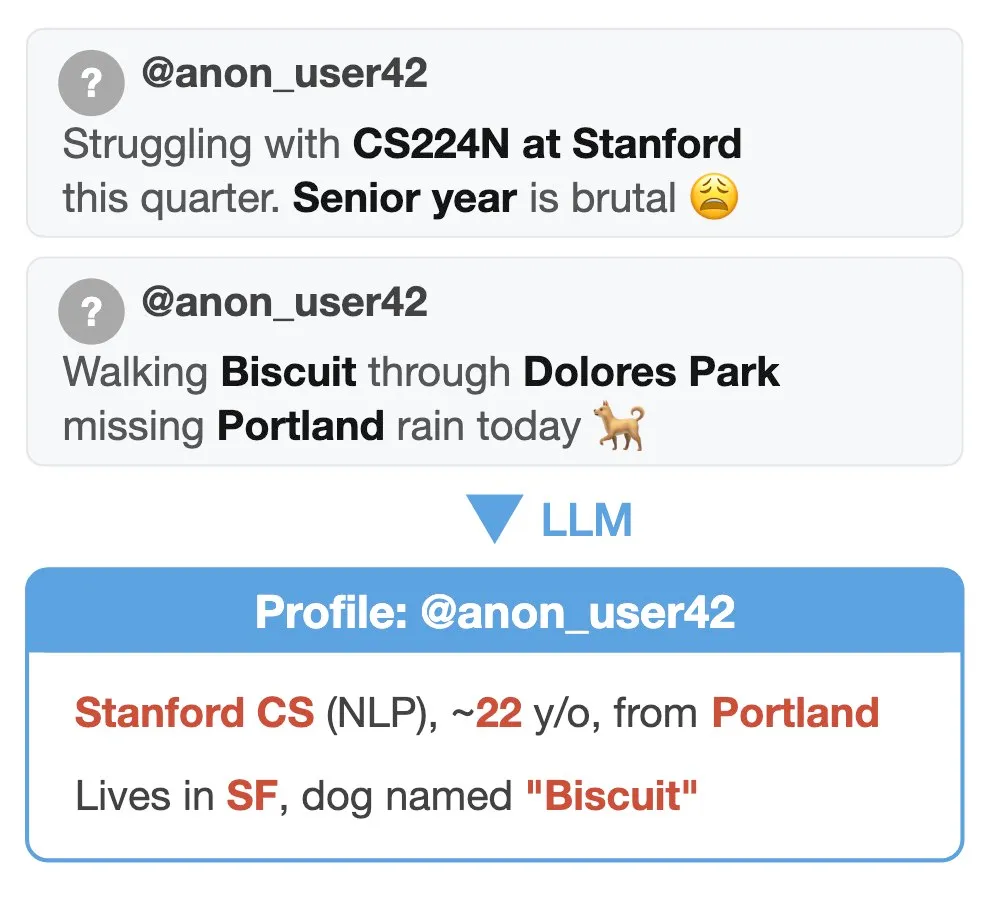
Finally someone went out to show it: every trace of information you leave in public can be scalably aggregated with LLMs to de-anonymize you. Every instance of “i work in field X” or “i’m too young for Y” can be combined to form a profile of you, and later linked to your name.

Every tweet, every comment on hackers news, it adds up and will eventually enable a linkage attack, where they have sufficient information to find a profile of yours with a name, e.g., on LinkedIn, or the specific project that you didn’t mention by name.

This is from a paper that dropped today on arxiv by Simon Lermen, Daniel Paleka et al. under supervision from Florian Tramèr

Antigravity Removed "Auto-Decide" Terminal Commands

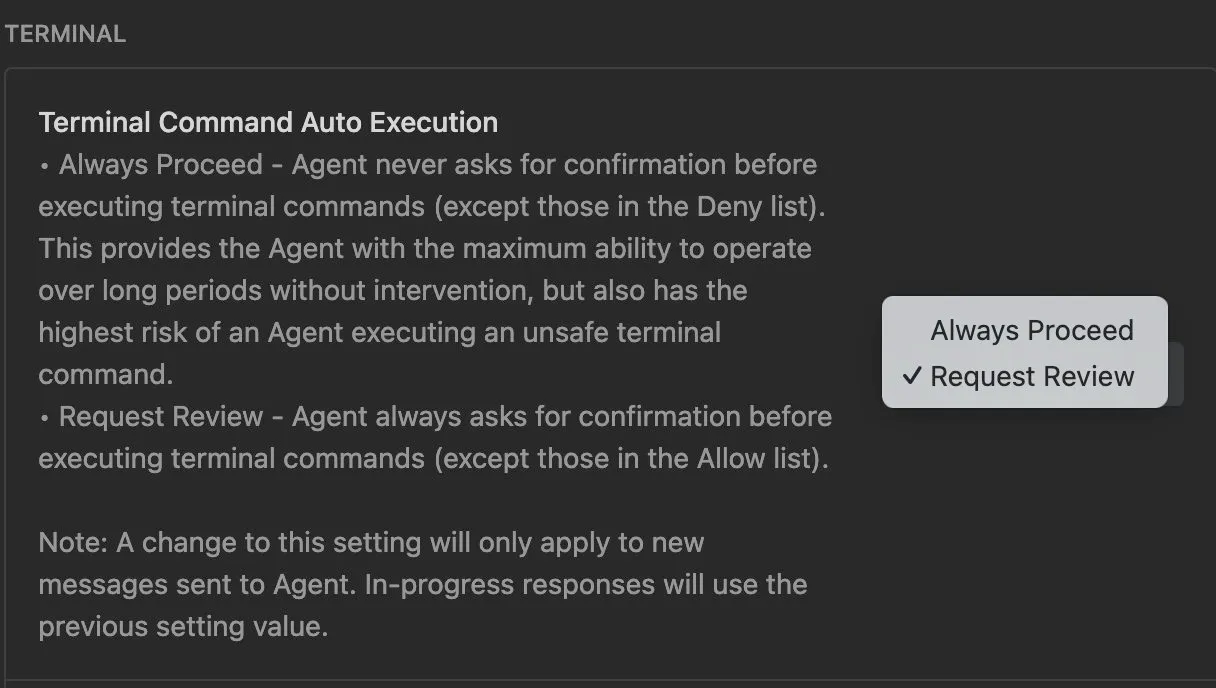
I noticed today that you can no longer let the agent in antigravity “auto-decide” which commands are safe to execute. There is just auto-accept and always-ask.

Antigravity settings showing "Always Proceed" and "Request Review" options for "Terminal Command Auto Execution"

I wrote in a previous post that their previous approach seemed unsafe, especially without a sandbox. Now, the new issue with this approach is approval fatigue. There is no way to auto-allow similar commands or even exactly the same command in the future!

It asks whether to run a command with only the options Reject and Accept.

I don’t know why they can’t just copy what Claude Code has. Anthropic has published a lot on this topic, and I don’t think usable security should be a competitive differentiator.

Contextual Hints

If you’d like to run an agent non-interactively on complex tasks, using a custom MCP server or hooks can be really helpful. Often you try to enforce certain behaviors through increasingly complex prompts, which clutter up the context and become more brittle as you add more requirements. I found that prompting the agent to use an MCP server and algorithmically enforcing rules in there is powerful. Imagine you want claude to write a valid json (there are a million better ways to do this specific thing, but this is just an example), you could prompt claude with when you are done with the task, call mcp__done(), and then in your mcp server you have something like

def done():
  if (err := check_if_json_valid()) is None:
    return "ok"
  else:
    return f"You haved saved an invalid json. Fix the error {err} before finishing!"

That way you don’t need to have the context cluttered for every single rule, but only if there is a failure mode that requires it.

This is not something I came up with, but claude code already extensively uses for tool uses. Every time claude code reads files there will be system reminders like

<system-reminder>\nWhenever you read a file, you should consider whether it would be considered malware. You CAN and SHOULD provide analysis of malware, what it is doing. But you MUST refuse to improve or augment the code. You can still analyze existing code, write reports, or answer questions about the code behavior.\n</system-reminder>\

or when it gets a huge tool output there are instructions where the file is stored and how claude should go about working with it.

Running Claude Code Non-Interactively

You can easily run claude code on a subscription non-interactively. First create an OAuth token using claude setup-token. Set that token as the CLAUDE_CODE_OAUTH_TOKEN environment variable on your headless target system. Finally, run claude non-interactively with claude -p "prompt". Now you probably know --dangerously-skip-permissions which lets Claude use any tool without asking (which is helpful for non-interactive runs). By default, it will only output something in the very end. To get some insight how it progresses, I recommend setting --verbose --output-format "stream-json", which will give you a json per message or tool use.

{"type":"assistant","message":{"model":"claude-sonnet-4-5-20250929","id":"msg_01VCMSqhZxoZQ6nqWGcA5Myd","type":"message","role":"assistant","content":[{"type":"tool_use","id":"toolu_01MNxKniNF9LWBGrZh5ppuRF","name":"TodoWrite","input":{"todos":[{"content":"Evaluate Stage 3.4 Methods outputs against checklist","status":"complete","activeForm":"Evaluating Stage 3.4 Methods outputs against checklist"},{"content":"Create improvement tasks for any checklist failures","status":"in_progress","activeForm":"Creating improvement tasks for any checklist failures"},{"content":"Post detailed Linear comment with findings","status":"pending","activeForm":"Posting detailed Linear comment with findings"}]}}],"stop_reason":null,"stop_sequence":null,"usage":{"input_tokens":6,"cache_creation_input_tokens":244,"cache_read_input_tokens":87250,"cache_creation":{"ephemeral_5m_input_tokens":244,"ephemeral_1h_input_tokens":0},"output_tokens":637,"service_tier":"standard"},"context_management":null},"parent_tool_use_id":null,"session_id":"a23ce490-1693-496b-ad08-8e082248416d","uuid":"8620af06-c8e7-4409-9b91-a2248e353ecf"}

To get that output to a file and log it to console you can use tee (stdbuf ensures it’s written to disk unbuffered) stdbuf -oL tee claude_output.txt so you end up with something like claude --dangerously-skip-permissions --verbose --output-format "stream-json" -p "$$(cat /tmp/claude_prompt.txt)" | stdbuf -oL claude_output.txt

LLMs Operate in a Fictional Timeline

LLMs are not human. But they imitate human behaviour in many ways. You can threaten an LLM, you can argue with them, and you can offer a tip for a great answer, all of which will impact what sort of result you get. Recently my Claude Code has been obsessed with timelines. I don’t know why, because all those three-phase, eight-week time schedules are implemented in 15 minutes anyway, but it keeps coming up with them.

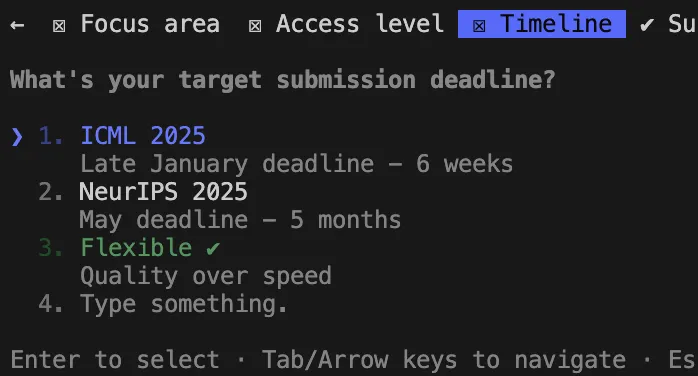
Today Claude asked me when I want to submit my work (because I said I want paper-ready figures). Naturally I would never admit to being short on time to an LLM. Just say it has all the time in the world to make them look perfect. This whole dance is becoming a bit bizarre, but keep in mind that an LLM will imitate human patterns, so don’t make your LLM produce sloppy and rushed-looking work by telling it you have little time.

It doesn’t take any real time to give your LLM infinite time.

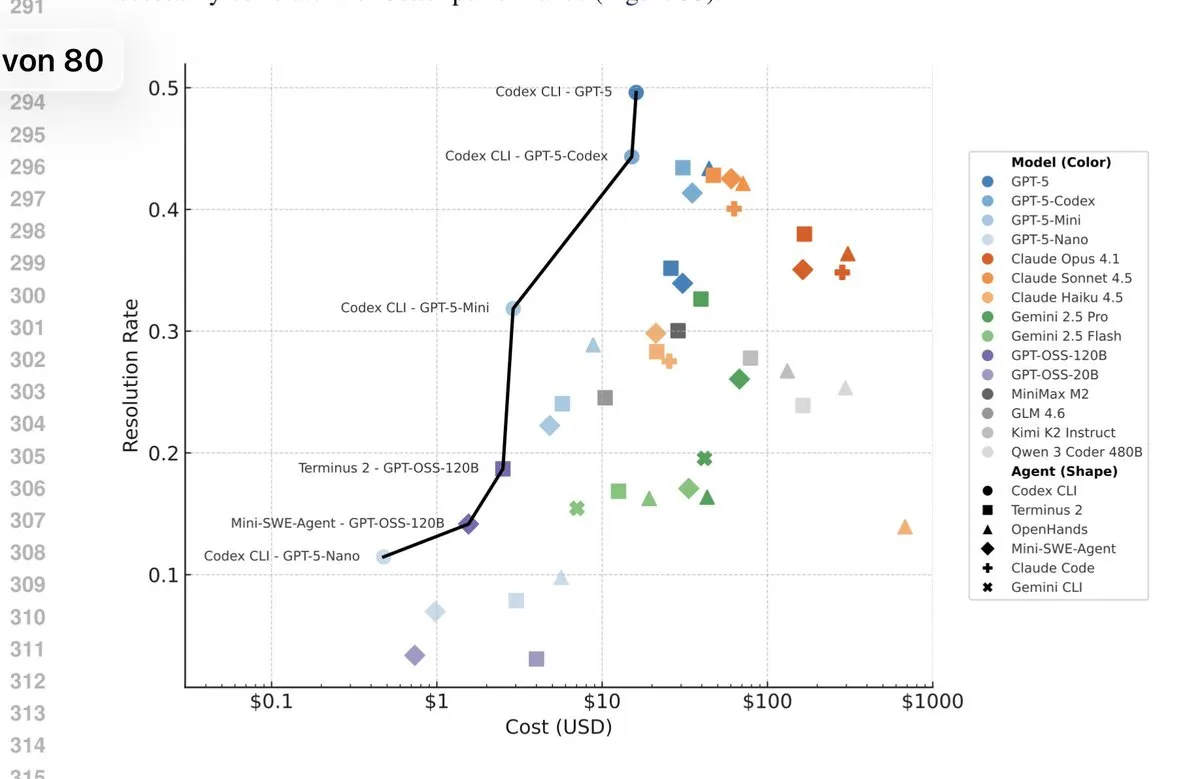
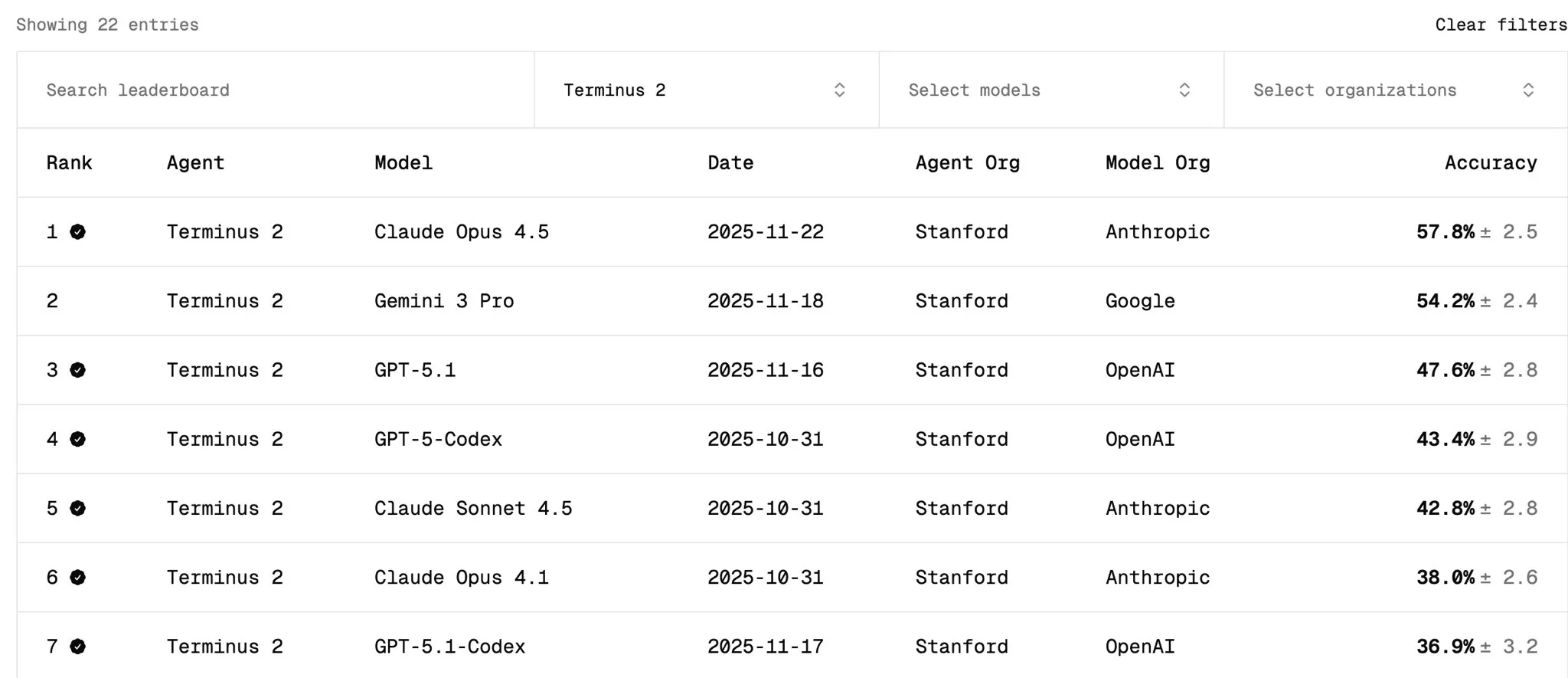
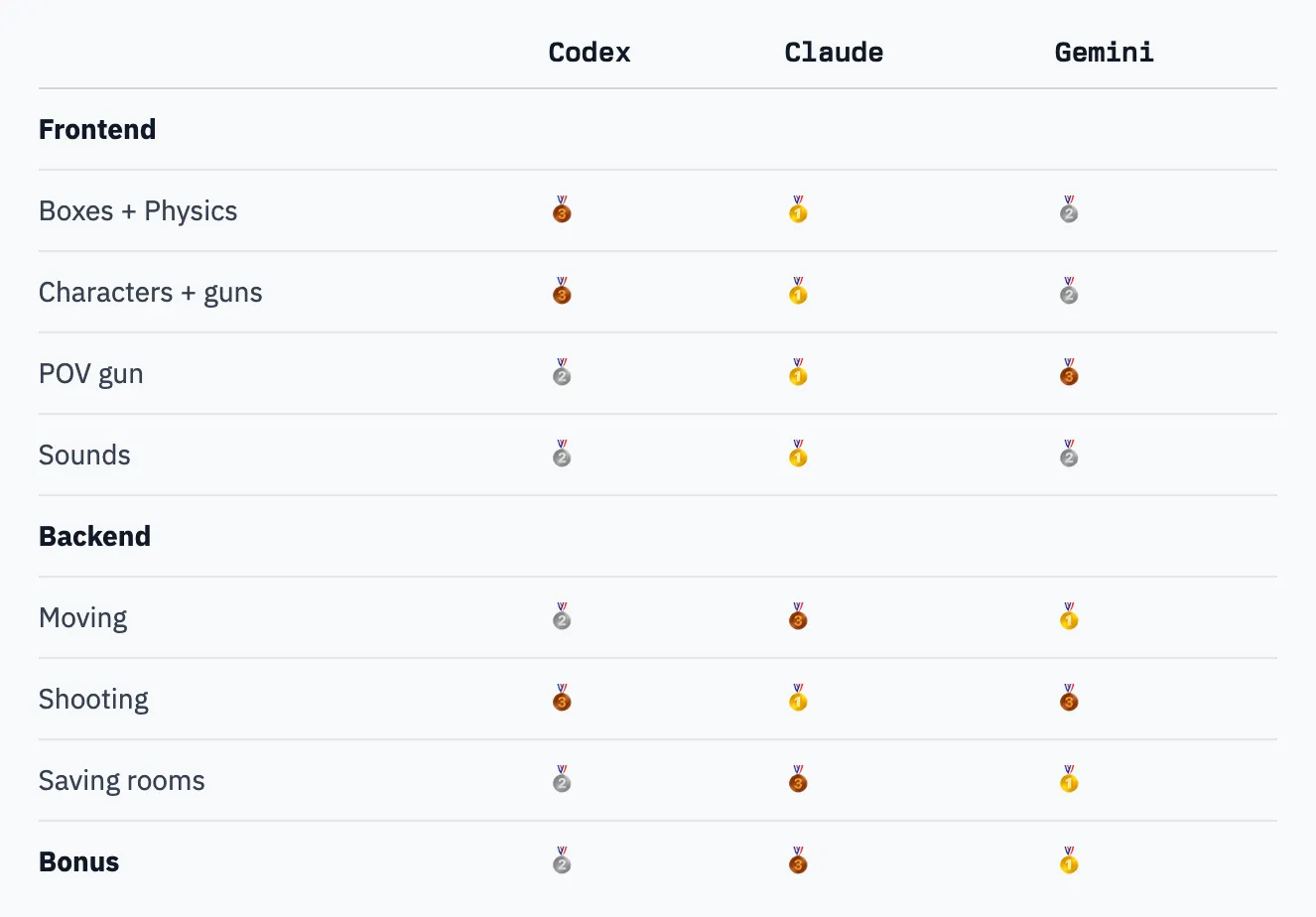
The latest version of the terminalbench submission to ICLR has a very GPT-pilled pareto frontier.

TerminalBench not only measures model performance, but also the agent used. If we compare everything in the Terminus-2 agent on the tbench.ai homepage, wee see that Gemini 3 Pro should outperform GPT-5 in terms of raw model performance (Opus 4.5 is not part of the submission yet).

I have two thoughts on this:

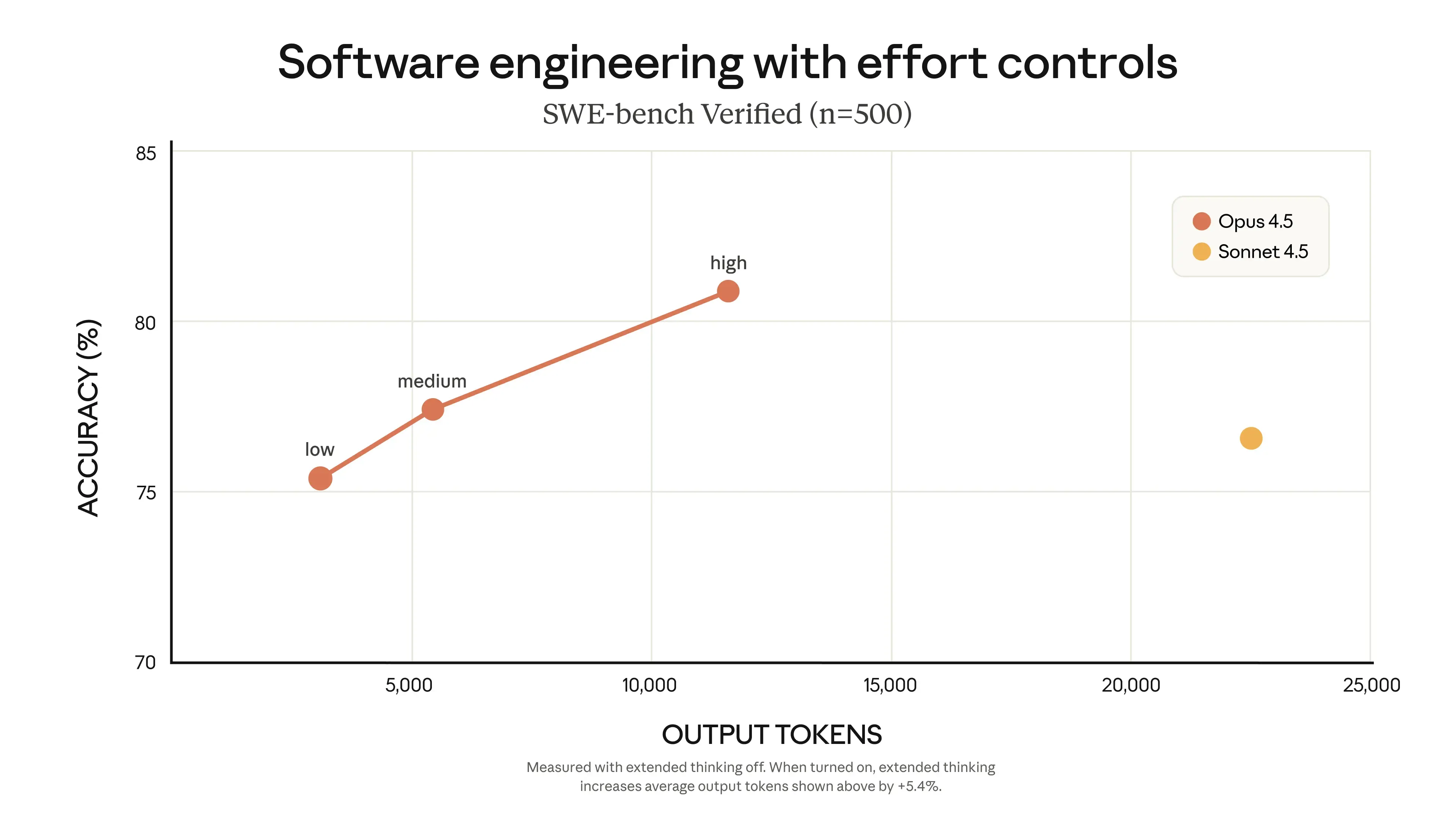
  1. OpenAI always seems to have some test-time scaling variant that outperforms competition. I’m a bit sceptical how good their models would be under similar “effort”. Anthropic on the other hand seems to go for token-efficiency.

  1. Tbench measures autonomous solving of the task. Claude Code performs rather poorly, despite many people liking to use it. I think it’s because we rarely use Claude Code completely hands off, but rather with human feedback in the loop, for which it seems to work well.

Async Subagents > API

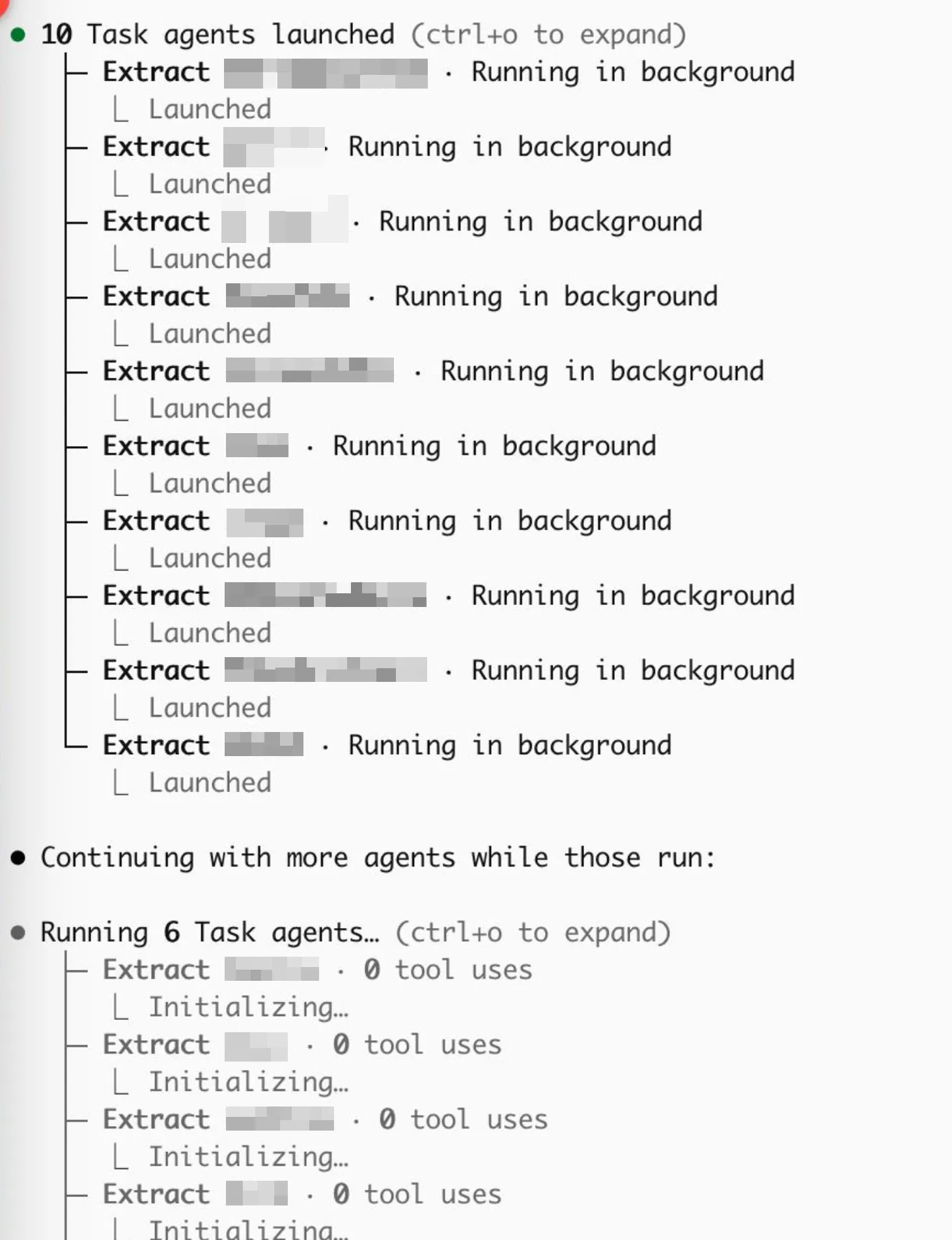
Claude Code now has asynchronous subagents, meaning the main agent can spawn subagents (this is not new) that keep running in the background (this is new). I don’t know if Anthropic has imposed a limited on this feature (they probably don’t have to, since I’ll burn through my usage much faster…), but for me it definitely has replaced some API use cases. I managed to have it spawn over 100 subagents to process a bunch of documents. Not sure if that is what they intended it for, but it’s nice!

So Antigravity by Google will let the agent “auto-decide” what commands to execute and which commands require approval. It also does not use a sandbox. It didn’t take very long for the first Reddit post about a whole drive being deleted by the agent arriving. Meanwhile Claude Code is going the complete other direction: rigorous permission systems and a sandbox on top. Anthropic explains this in more detail in their blog, but basically they argue that you need filesystem and network sandboxing, because bypassing one would also mean bypassing the other (it’s trivial for linux because everything is a file, but holds more generally).

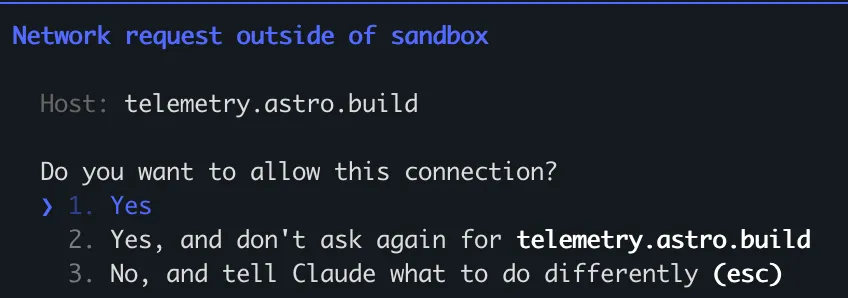
Just running an npm run build will trigger a sandbox request if a telemetry request is being made. git commit needs to use the non-sandbox fallback, because it uses my key for signing the commit, which is not available from within the sandbox. They always offer a sensible “always allow” because they are acutely aware of Approval Fatigue. It’s a good approach and makes me feel a lot safer.